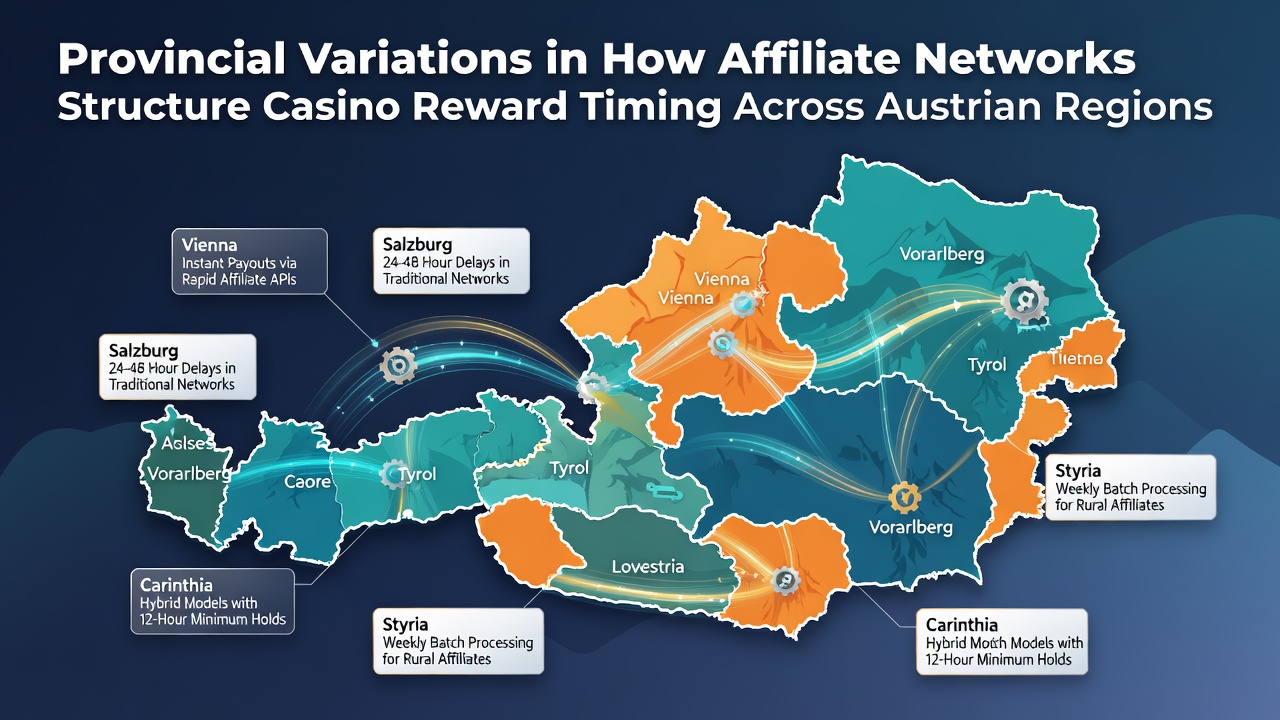
Provincial Variations in How Affiliate Networks Structure Casino Reward Timing Across Austrian Regions
Provincial differences shape how affiliate networks organize the release schedules for casino rewards in Austria, and these patterns reflect local economic cycles, tourism flows, and regulatory nuances that vary from one region to the next. Data from regulatory filings indicate that networks adjust payout intervals and bonus activation windows to match the spending rhythms observed in each province, which creates distinct operational calendars across the country.
Regional Timing Frameworks in Upper and Lower Austria
Affiliate networks in Upper Austria often coordinate reward distributions around agricultural and industrial payment cycles that peak in late spring and early autumn, while Lower Austria sees more emphasis on extended summer windows tied to Danube tourism traffic. Researchers tracking these structures note that networks deploy staggered release mechanisms in both provinces, allowing operators to align promotional credits with regional payroll patterns and visitor influx data collected through local tourism boards. This coordination reduces overlap between competing campaigns and maximizes player engagement during high-traffic periods.
Industry reports compiled by the European Gaming and Betting Association reveal that networks serving these two provinces maintain separate tracking dashboards for reward timing, which helps them respond to provincial tax filing deadlines that influence when operators prefer to issue bonuses. Those dashboards incorporate real-time inputs from payment processors that operate differently in each jurisdiction.
Western Provinces and Alpine Season Adjustments
In Tyrol and Vorarlberg, affiliate networks structure reward timing around winter sports seasons and summer hiking periods, with bonus pools activated in coordinated waves that correspond to lift ticket sales data and hotel occupancy rates. Networks active in these areas frequently use multi-phase rollout schedules, releasing initial credits ahead of peak arrivals and following up with retention bonuses once visitors have settled into their stays. Observers note that this approach differs markedly from flatter eastern provinces where event calendars lack the same seasonal extremes.
Burgenland and Carinthia Approaches to Reward Sequencing
Burgenland networks tend to favor shorter reward cycles that sync with harvest-related economic activity and border traffic from neighboring countries, whereas Carinthia operations extend timing intervals to accommodate lake tourism that stretches from May through September. Figures from provincial gaming summaries show these networks employ distinct escrow release protocols, which allow operators to hold portions of promotional funds until specific regional milestones are reached. The result is a patchwork of activation dates that affiliate platforms must manage through customized scheduling tools.
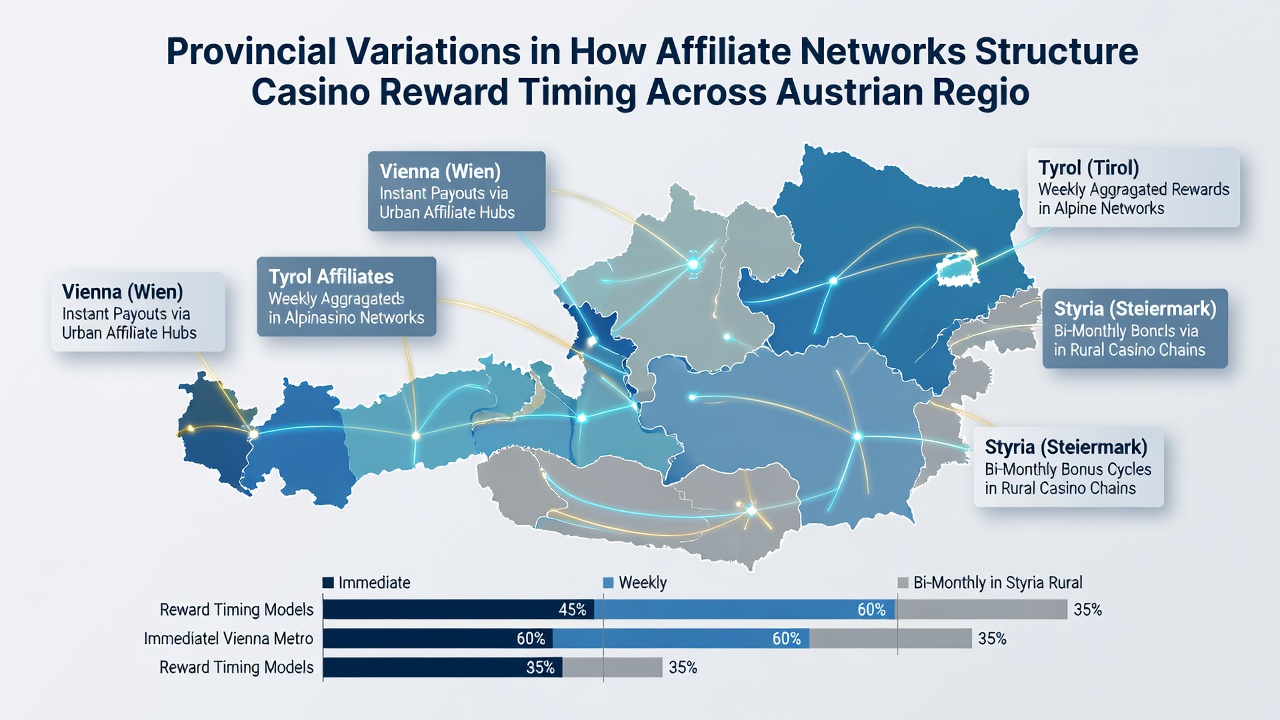
Networks operating across both provinces rely on localized data feeds from regional chambers of commerce to refine their calendars, and they adjust intervals when new infrastructure projects alter visitor flows. In November 2026, updates to provincial reporting requirements prompted several networks to recalibrate their sequencing tools ahead of the following year's tourism forecasts.
Comparative Data from Other Jurisdictions
Comparative analysis draws on structures observed in other regulated markets, where timing mechanisms also adapt to sub-national variations. Data from iGaming Ontario demonstrates how provincial operators in Canada fine-tune bonus releases according to local economic indicators, while reports issued by the Australian Communications and Media Authority highlight similar adaptations in state-level gambling promotions. These examples illustrate broader patterns that Austrian networks reference when refining their own regional calendars.
Conclusion
Provincial variations in reward timing continue to influence how affiliate networks allocate resources across Austrian regions, with each area maintaining distinct operational rhythms shaped by tourism, tax cycles, and local economic data. Networks that track these differences maintain separate protocols for each province, which supports more precise campaign delivery and reduces conflicts between overlapping promotional windows. As regional data collection improves, these timing structures are expected to become even more granular in the years ahead.