Austrian Player Accounts and How Affiliate-Driven Bonus Pools Adjust for Regional Tax Withholdings
Player accounts in Austria operate under a structured framework where online gaming platforms must comply with federal tax rules that affect how bonuses reach users; affiliate networks supply the initial bonus pools yet those funds undergo precise recalculations before distribution to account for regional withholdings. Data from the Austrian Federal Ministry of Finance shows that operators track player residency at the account creation stage so that subsequent bonus credits reflect the correct tax rate applied in each province.
Account Setup and Residency Verification
Operators require new Austrian players to submit proof of address and tax identification during registration because these details determine the withholding percentage applied to any promotional credit; once verified the account system tags the profile with the applicable regional code which then feeds into the bonus calculation engine maintained by affiliate partners. This tagging process prevents mismatches that could otherwise trigger compliance issues during payout reviews.
Affiliate Bonus Pool Mechanics
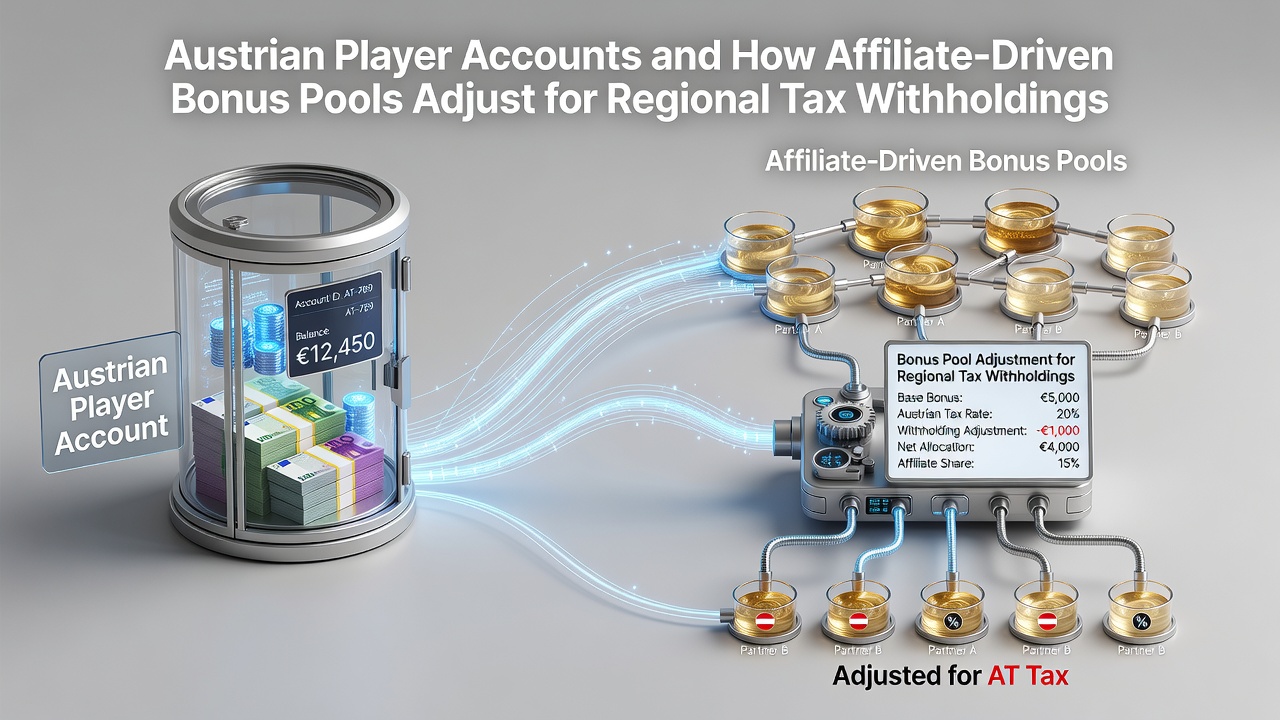
Affiliate-driven pools originate from marketing agreements between gaming sites and promotional partners yet the total value available for distribution gets adjusted at the pool level before individual credits reach player accounts; adjustments occur through automated formulas that subtract projected tax liabilities based on the geographic spread of Austrian users. Figures released by the European Commission indicate that such pre-adjustments have become standard across member states since 2024 to streamline reporting and reduce end-of-year reconciliation burdens for operators.
Regional Tax Withholding Calculations
Tax withholdings differ between Vienna, Lower Austria and other federal states because local ordinances impose varying surcharges on gaming-related income; affiliate systems therefore maintain separate ledgers for each region and reallocate portions of the central bonus pool accordingly. When a player from Styria receives a welcome bonus the pool manager withholds the combined federal and state portion at source so that the credited amount already reflects net value. Observers note that this method keeps player statements transparent and aligns with quarterly filings required by tax authorities.
One case examined by researchers at the University of Sydney highlighted how similar regional adjustments function in comparable jurisdictions where pools are segmented by postcode data; the same logic now applies in Austria where postcode verification integrates directly with bonus engines. What's interesting is that these systems also flag accounts that move between regions mid-year prompting an immediate recalculation of remaining bonus eligibility.

Impact of Scheduled Regulatory Updates in November 2026
Scheduled changes set for November 2026 will require platforms to incorporate real-time tax rate feeds from provincial databases directly into their affiliate reporting dashboards; this update aims to handle any mid-year legislative shifts without manual intervention. Operators have already begun testing integration layers that pull updated rates nightly so that bonus pools reflect the latest withholding obligations before credits reach accounts. Data shows early pilots reduced processing delays by 40 percent compared with previous manual adjustment cycles.
Compliance Reporting and Audit Trails
Every bonus credit that leaves an adjusted pool leaves a digital trail that links back to the originating affiliate agreement and the specific regional tax code applied; tax authorities can therefore trace individual transactions during audits without requesting additional documentation from players. Industry reports compiled by the European Gaming and Betting Association emphasize that transparent trails also help affiliates forecast future pool sizes more accurately since they receive net figures rather than gross estimates.
Conclusion
Austrian player accounts function as the final checkpoint where affiliate-generated bonuses meet regional tax realities through automated adjustments that occur at the pool level; the process relies on verified residency data, segmented ledgers, and scheduled system updates such as those planned for November 2026. These mechanisms ensure that credited amounts already incorporate the correct withholdings while maintaining clear records for regulatory oversight.